

Contact Form
Why Suburban Onondaga County Should Take a Serious Look at Townhome Development
Housing affordability and availability are no longer abstract policy discussions. They are everyday realities affecting homebuyers, homeowners, municipalities, and local economies throughout Onondaga County. As New York State moves aggressively to stimulate housing production, particularly in Central New York, suburban communities will need to think carefully about how — and what — they build.
One form of housing deserves closer consideration: townhome development.
Recent state initiatives, including a $150 million housing loan fund aimed at accelerating residential development in Central New York, signal a clear policy direction. State officials are emphasizing the need for denser housing, generally targeting at least 10 units per acre for both rental and for-sale developments. That benchmark challenges many traditional suburban zoning models built around large-lot, single-family homes.
Townhomes sit at the intersection of state policy goals, market demand, and sound local planning.
Townhomes as a Practical Response to Density Goals
Meeting density targets of 10 units per acre is difficult with conventional single-family subdivisions. Townhomes, by design, make more efficient use of land by attaching units while maintaining individual ownership.
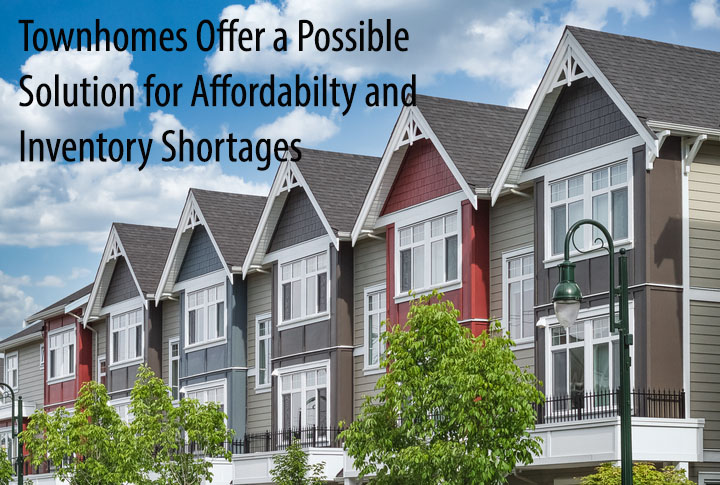
Unlike large apartment complexes, townhomes often blend more comfortably into suburban settings. They provide higher density without introducing building forms that many communities resist. From a planning perspective, they represent a middle ground between low-density sprawl and high-density multifamily construction.
Expanding Homeownership Opportunities for First-Time Buyers
Another important benefit of townhome development is affordability — particularly for first-time homebuyers who are often priced out of traditional single-family homes. Townhomes typically cost less to build and purchase, while still offering fee ownership and the opportunity to build equity over time.
For many buyers, townhomes serve as a practical entry point into homeownership, allowing households to establish equity today that can later be leveraged toward a detached single-family home if their needs change.
A Viable Option for Downsizing Homeowners
Townhomes are not only about first-time buyers. They also serve an important role for mature homeowners who want to downsize from larger single-family homes but remain homeowners rather than renters. For many long-time residents, townhomes provide a more manageable footprint, lower operating costs, and the ability to remain in their community.
This transition can free up larger homes for growing families, improving housing circulation without expanding outward development.
How HOAs Help Protect Value and Keep Communities Well-Maintained
When developers plan thoughtfully, the inclusion of a homeowners association (HOA) can be a significant asset rather than a drawback. An HOA that handles exterior maintenance, landscaping, and shared infrastructure reduces the burden on homeowners while helping ensure consistent upkeep across the community.
From a planning and market perspective, well-managed HOAs play an important role in maintaining long-term property values by preserving appearance, functionality, and common standards. Locally, communities such as Erie Village demonstrate how this model can work effectively when it is designed and managed well.
Townhomes as Smart Infill Development
From a land-use perspective, townhomes are especially well-suited for infill development. Rather than extending roads, water lines, sewer systems, and utilities into undeveloped areas, infill projects capitalize on public infrastructure already installed and in place.
Based on years of local planning board experience, well-designed townhome projects can represent a fiscally responsible form of growth. They add needed housing supply without the full cost and impact of extending new infrastructure into greenfield areas.
A Broader Housing Strategy for Suburban Communities
Townhome development is not a cure-all, nor should it replace single-family housing altogether. However, as state policies increasingly emphasize density, affordability, and efficient land use, suburban communities that diversify their housing stock will be better positioned to meet local demand and align with broader policy expectations.
Townhomes offer a flexible, market-tested solution that supports multiple needs at once: attainable ownership for first-time buyers, downsizing options for long-time homeowners, efficient use of land and infrastructure, and long-term neighborhood stability through thoughtful design and management.
For suburban Onondaga County, the question may no longer be whether townhomes fit — but whether communities can afford to ignore them.
Source
This commentary was inspired by recent reporting on New York State’s efforts to accelerate housing development in Central New York, including a $150 million regional housing loan fund and related state emphasis on higher-density residential development.
Robert Smith — NYS Licensed Real Estate Broker; NYS Licensed Real Estate Instructor (CDEI); 40 years’ experience in the real estate industry; served over a decade as Chair of the Town of Cicero Planning Board.
Robert and Cindy Smith own and operate the Professional Career Center, a NYS Licensed Real Estate School in Syracuse, New York.
Questions? bob@pccsyr.com